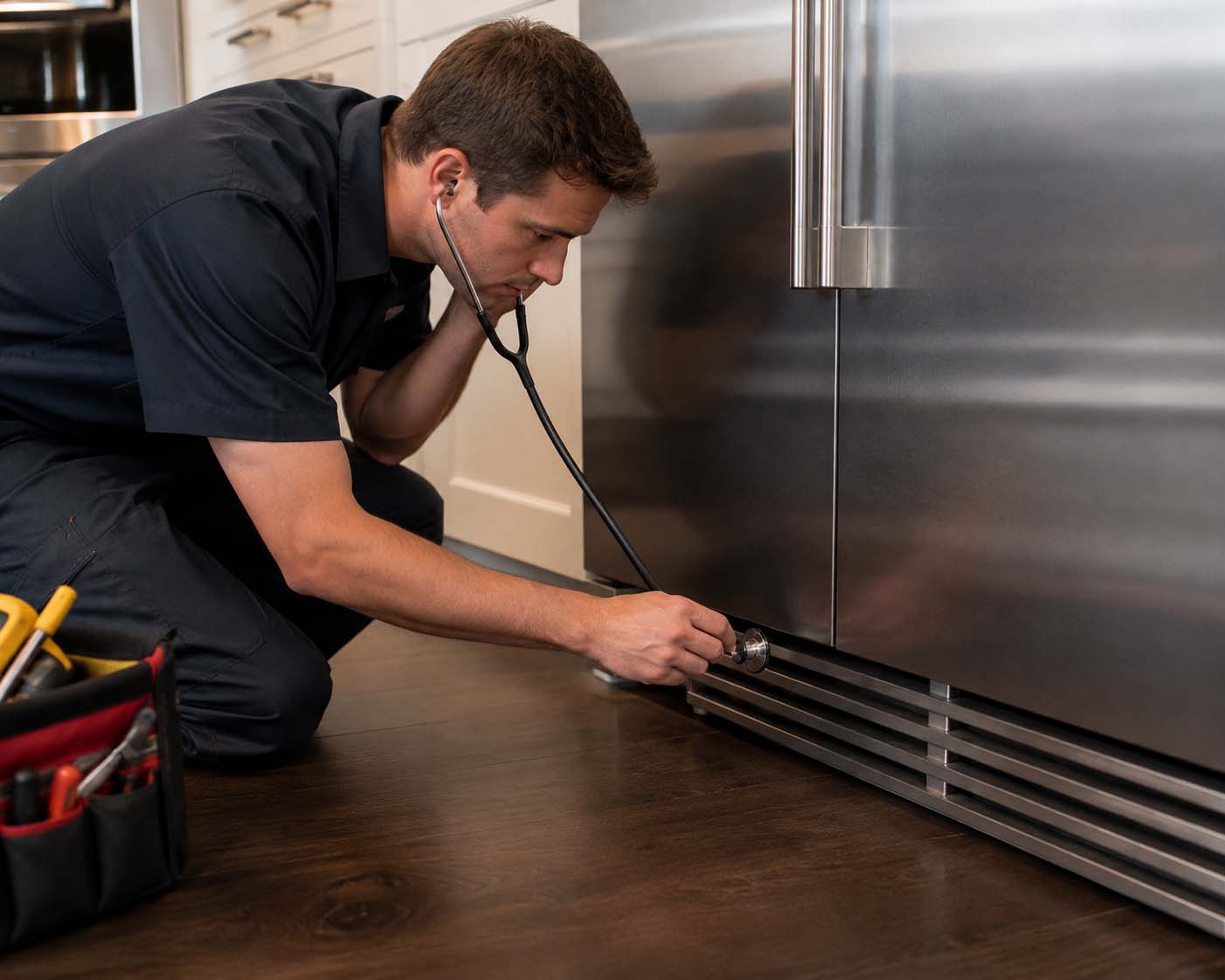
A Thermador refrigerator making noise usually points to one of five parts: the evaporator fan, the condenser fan, the compressor, the water inlet valve, or the ice maker. Some sounds are normal cooling operation. A loud, sudden, or grinding noise signals a worn part that needs attention.
Your Thermador is a built-in, column, or Freedom® unit, not a budget fridge. That means quieter engineering and tighter cabinet fits. So a new sound stands out fast. This guide helps you match the noise to the part, run a few safe checks, and know when the fix needs a certified technician. We service built-in and column Thermador refrigeration every day, so the sounds below come from real repair patterns.
Is This You? Common Thermador Refrigerator Noises
Sounds fall into a few clear groups. Matching the sound is the first step toward the cause.
- Buzzing or humming — often the compressor or water inlet valve.
- Grinding or squealing — usually the evaporator or condenser fan.
- Rattling or vibrating — loose parts, an unlevel unit, or the drain pan.
- Clicking or whining — the damper control or a start relay.
- Clunking during ice fill — the ice maker harvest cycle, often normal.
Timing matters too. A noise that comes and goes with cooling cycles is different from a constant one. Note when the sound starts before you troubleshoot.
What Is Normal vs. What Is Not
Every refrigerator makes some sound. Knowing the baseline saves an unneeded service call.
Normal sounds include a low compressor hum, a soft fan whir, gurgling refrigerant, and occasional popping as parts expand or contract. Ice makers also clunk during the fill and harvest cycle.
Warning sounds include loud grinding, sharp squealing, rapid clicking, heavy rattling, or a buzz that grows louder over days. These point to a worn or failing part.
Quick DIY Checks (Safety First)
⚠️ Safety warning: Unplug the refrigerator or switch off its dedicated circuit breaker before you touch any internal part, fan, or panel. Built-in Thermador units carry high amperage and moving fan blades. Never reach behind a running fan.
Work through these checks in order. Stop at any step that needs tools you do not have.
- Level the unit. A refrigerator that rocks will rattle and vibrate against the cabinet. Adjust the front legs or rollers until it sits firm.
- Clear the top grille and condenser. Thermador built-in columns pull heat through a top grille. Dust buildup makes the condenser fan work harder and louder. Vacuum the grille and coils.
- Check the drain pan. A loose pan under the unit rattles during cycles. Reseat it.
- Inspect around the unit. Bottles, cans, or a swaying water line can buzz against the cabinet. Move loose items and secure the line.
- Listen to locate the source. Open the freezer. If the noise gets louder, the evaporator fan is the likely culprit. If it is loudest at the back or bottom, look at the condenser fan or compressor.
Stop here if you smell burning, see sparks, or the noise comes with warming food. Those signs point to electrical or sealed-system faults that need a technician.
Likely Internal Causes, Part by Part
When basic checks do not solve it, the noise is coming from a specific component. Here is what each sound usually means on a Thermador.
Evaporator fan (freezer, behind the back panel)
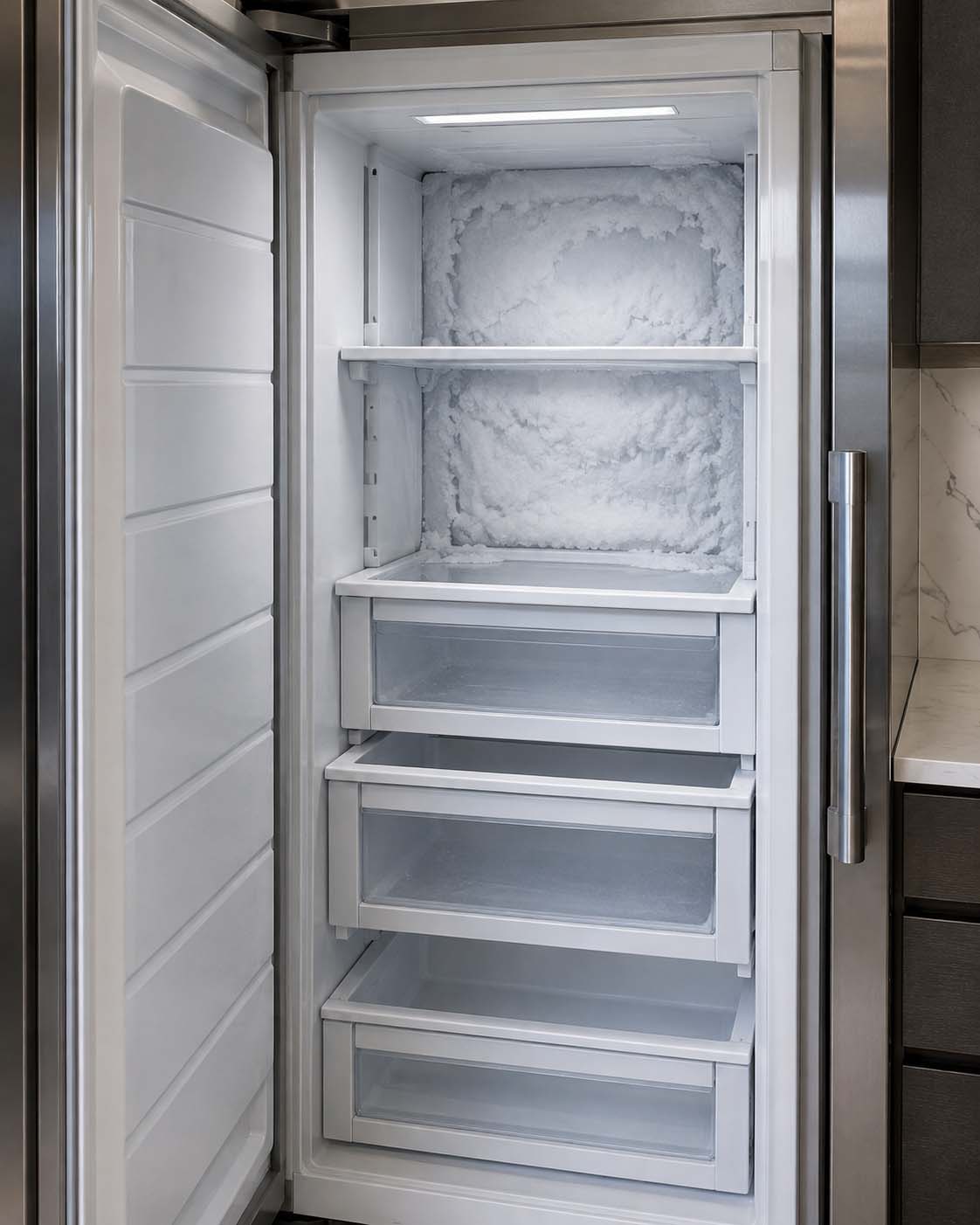
A grinding or squealing sound that gets louder when you open the freezer door points here. The blade may be iced over, bent, or the motor bearing may be failing. This is one of the most common noise sources in built-in refrigeration.
Condenser fan (lower rear or top grille area)
A rattling or humming from the back or top often means the condenser fan. Dust, a bent blade, or a worn motor makes it loud. Cleaning helps first; a failing motor needs replacement.
Compressor (lower rear)
A steady hum is normal. A loud buzzing, knocking, or a hum that climbs in volume can mean the compressor or its start relay is struggling. Compressor work is a sealed-system repair and is not a DIY job.
Water inlet valve (rear connection)
A buzzing or chattering during ice or water fill points to the inlet valve, often paired with low household water pressure. A failed valve buzzes even when it should be closed.
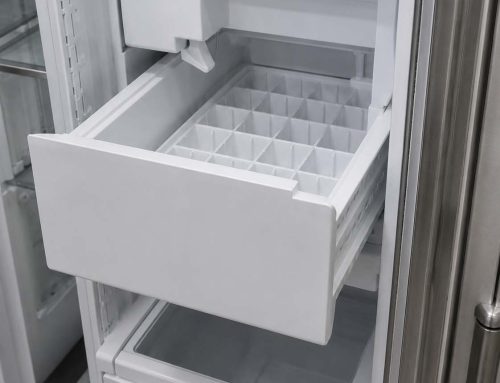
Ice maker assembly
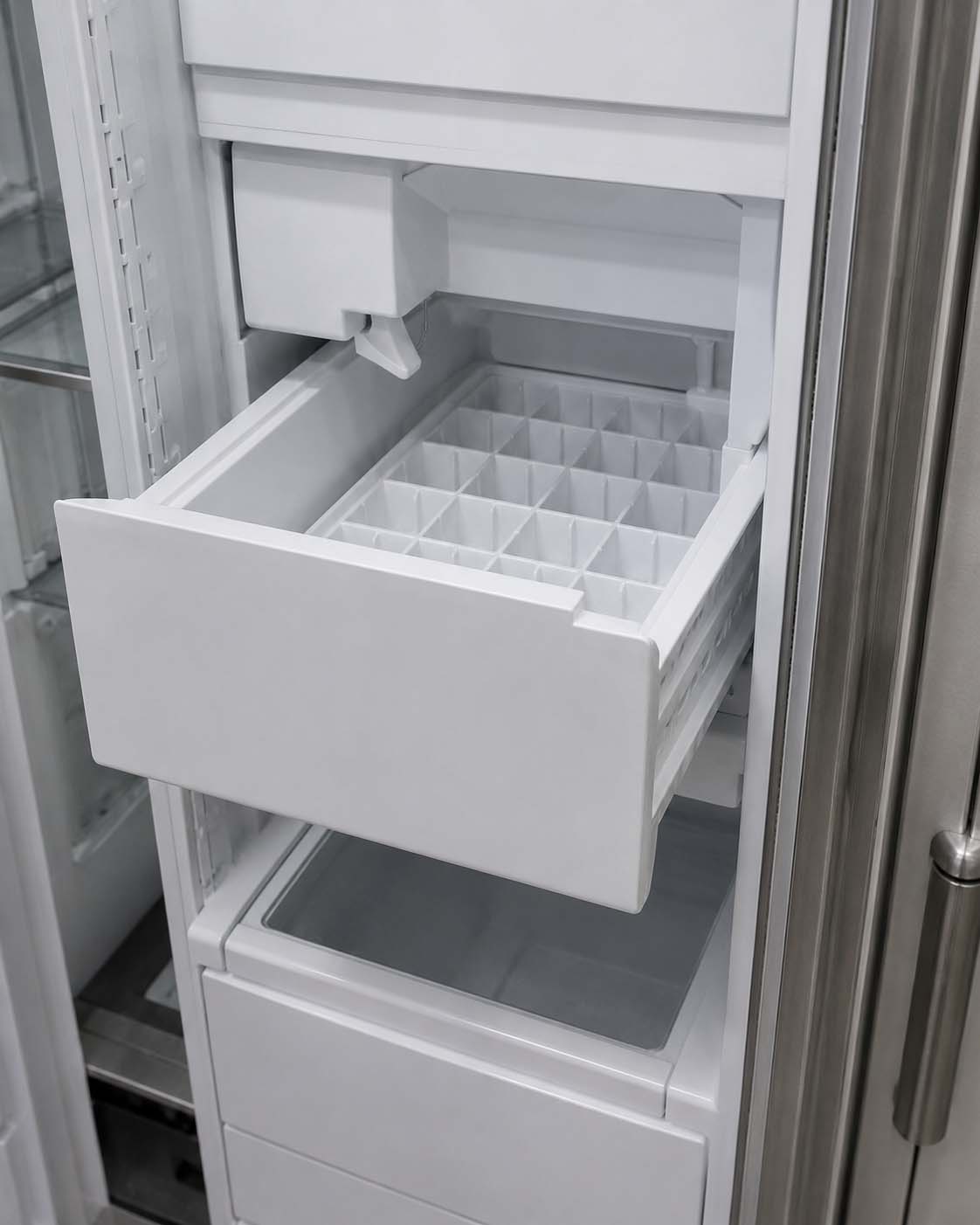
Clunking and buzzing during the fill and harvest cycle is usually normal. A grinding drive motor or a stuck module is not. If the noise is constant rather than cyclic, the ice maker module may be failing.
Damper control assembly
A clicking or whining as the fridge cycles can be a worn air damper. It opens and closes to control airflow and gets noisier with age.
When to Call a Pro
Some Thermador noises are safe to chase yourself. Others need certified diagnosis to protect a $3,000 to $15,000 appliance. Call a technician when:
- The compressor buzzes loudly, knocks, or the fridge stops cooling.
- A fan grinds or squeals after you have cleaned and cleared it.
- You smell burning or see any electrical arcing.
- The noise comes with warming food, frost buildup, or water on the floor.
- The sound returns after your DIY fix.
Built-in and column Thermador units sit flush in cabinetry and often need partial removal to reach the condenser or compressor. That work belongs with a technician who handles Freedom® refrigeration. Our team offers certified Thermador repair with same-day service in many areas.
Need it fixed now? Call Thermador Repair Group at (855) 920-0838 or book online for certified diagnosis.
Thermador Refrigerator Noise Repair Costs
Figures below are general industry estimates, not quotes. Your price depends on the part, model, and access. Built-in and column units can cost more due to their cabinet installation.
| Noise source | Likely repair | Estimated range* |
|---|---|---|
| Unlevel unit / loose pan | Adjustment, no part | $0 (DIY) – $150 |
| Condenser fan motor | Fan motor replacement | $200 – $450 |
| Evaporator fan motor | Fan motor replacement | $250 – $500 |
| Water inlet valve | Valve replacement | $200 – $400 |
| Ice maker module/motor | Assembly replacement | $300 – $600 |
| Compressor / start relay | Sealed-system repair | $600 – $2,000+ |
*General industry estimates. Thermador repair tickets commonly run $250 to $2,000. Confirm your price with a diagnostic visit.
For a full breakdown by part, see our Thermador refrigerator repair cost guide.
Serving Your Area
Thermador Repair Group provides certified refrigerator repair with same-day service in many markets, including the Los Angeles metro and Bay Area. We diagnose the noise, protect the built-in cabinetry, and use the right parts for Freedom® refrigeration.
Call today at (855) 920-0838 for fast, certified Thermador refrigerator service.
Frequently Asked Questions
Why is my Thermador refrigerator making a loud humming noise?
A loud humming noise on a Thermador refrigerator usually comes from the compressor or the condenser fan. A soft hum is normal cooling. A hum that grows louder over days often means a dusty condenser, a failing fan motor, or a compressor start relay under strain. Clean the coils first, then call a technician if the hum continues.
Is it normal for a Thermador refrigerator to make noise?
Yes, some noise is normal for a Thermador refrigerator. A low compressor hum, a soft fan whir, gurgling refrigerant, and occasional popping are all expected during cooling cycles. Ice makers also clunk during fill and harvest. Loud grinding, sharp squealing, or a buzz that keeps getting louder are not normal and need attention.
Why is my Thermador refrigerator buzzing?
A buzzing Thermador refrigerator is often the water inlet valve or the compressor. The inlet valve buzzes or chatters when the ice maker fills, especially with low water pressure. A steady buzz from the lower rear can be the compressor or its relay. Turn off the water supply to test the valve, then have a technician check the compressor.
Why does my Thermador fridge make noise when the door opens?
A Thermador fridge that gets louder when the door opens usually has an evaporator fan problem. The evaporator fan sits behind the freezer back panel and speeds up when the door opens. A bent blade, ice buildup, or a worn motor bearing makes it grind or squeal. This part typically needs replacement by a technician.
Should I unplug a noisy Thermador refrigerator?
Unplug a noisy Thermador refrigerator only if the noise is severe, comes with a burning smell, or the unit stops cooling. Unplugging protects the compressor from damage during a fault. For a mild noise, keep it running and book service so your food stays cold. Always unplug before you inspect any internal fan or part.
How much does it cost to fix a noisy Thermador refrigerator?
Fixing a noisy Thermador refrigerator generally costs between $200 and $600 for a fan motor or water inlet valve. Compressor and sealed-system repairs can run $600 to $2,000 or more. Simple fixes like leveling the unit or clearing the condenser cost little to nothing. A diagnostic visit confirms the exact price.