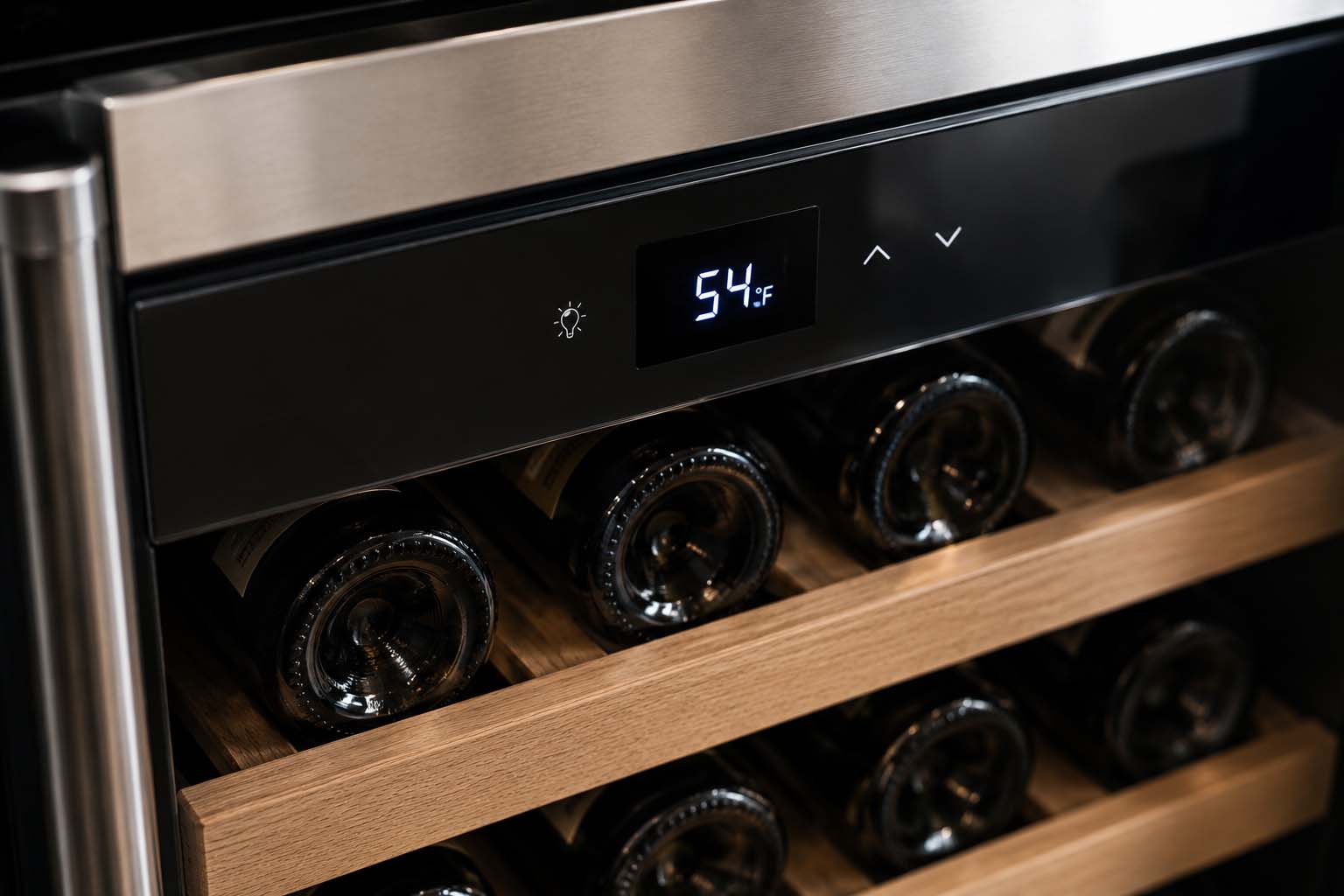
A Thermador wine cooler usually stops cooling for one of five reasons. The cause is often a failing condenser fan, dust-clogged coils, a bad temperature sensor, a failed compressor or thermoelectric module, or a worn door seal. A diagnostic visit pinpoints which one before you replace any part.
Your Thermador wine cooler holds a narrow temperature band by design. A sudden warm-up or a compressor that runs nonstop points to one specific mechanical cause, not general wear. This guide names the cause and the fix for each.
Thermador Repair Group is a certified provider that repairs Thermador refrigeration and cooking equipment, including built-in wine preservation columns from the Freedom Collection. The checks below cover single-zone and dual-zone units. If cooling doesn’t return after the quick fixes, book a certified wine cooler diagnostic before the compressor takes more damage.
Why your Thermador wine cooler stops cooling
Why is my Thermador wine cooler not cooling?
Cooling failure almost always traces to one system: airflow, refrigerant, sensors, or the seal. A blocked condenser fan or dust-caked coils stop the unit from moving heat out of the cabinet. That heat has nowhere to go, so the compressor works harder and the cabinet warms up.
A dirty condenser coil can raise compressor energy use by 30%, according to U.S. Department of Energy data cited by HVAC contractors (source). On a wine cooler, that shows up as a cabinet that never reaches its set point, or a compressor that short-cycles.
A sensor that misreads the interior temperature tells the control board to stop cooling too soon. A worn door seal lets humid room air in and forces the compressor to run nonstop just to hold ground.
In hot climates, this fault shows up most in summer, when a garage or an uninsulated wall pushes the room past the unit’s operating range. If your issue is a full-size refrigerator instead of a wine cooler, see the Thermador refrigerator troubleshooting guide for that appliance’s fault list.
Single-zone vs. dual-zone: how the failure shows up
A single-zone Thermador wine cooler uses one compressor and one thermostat for the whole cabinet. When it fails, every bottle warms together, and the display often shows a flat, wrong number instead of the set temperature.
Compressor-based coolers can vary up to 10°F between the top and bottom shelf, so a small gap alone isn’t a fault (source). A dual-zone unit runs two independent cooling systems in one cabinet, so only one side may fail while the other stays correct.
If your upper zone holds 45°F but the lower zone climbs past 60°F, the sensor or compressor on that side is the likely cause. The working zone rules out a power or main control board failure, since a shared fault would take down both sides at once.
Quick checks before you call for repair
Run these checks before booking a repair. They take a few minutes and rule out issues that aren’t mechanical.
- Confirm the room around the unit stays between 50°F and 80°F; both cooling systems struggle outside that band (source).
- Check that vents around a built-in column have several inches of clearance for airflow.
- Press the door until it clicks, and look for a warped or cracked gasket around the frame.
- Reset the breaker or GFCI outlet feeding the unit, then wait 10 minutes before checking the display.
- Confirm the set temperature wasn’t bumped by accident, especially after cleaning or a power outage.
If the cabinet is still warm after these checks, the fault sits inside a sealed system or an electronic component. That points to a repair call, not a DIY fix. See the Thermador maintenance checklist for the upkeep that prevents most of these faults.
Compressor and thermoelectric module faults
Some Thermador wine cooler models use a small compressor and refrigerant loop, the same core technology as a full-size refrigerator. Others, mostly compact under-counter units, use a thermoelectric module that moves heat without refrigerant or moving parts.
Thermoelectric modules generally can’t cool much below 50°F, one cooling-technology guide notes, which limits how cold a warm room lets the cabinet get (source). That ceiling matters if your unit sits in an uninsulated garage or a hot kitchen wall.
A failing compressor usually hums, clicks, or trips a breaker before it goes fully silent. A failing thermoelectric module tends to fail quietly, so the fan keeps running while the cabinet slowly climbs toward room temperature.
What a diagnostic visit finds (and costs)
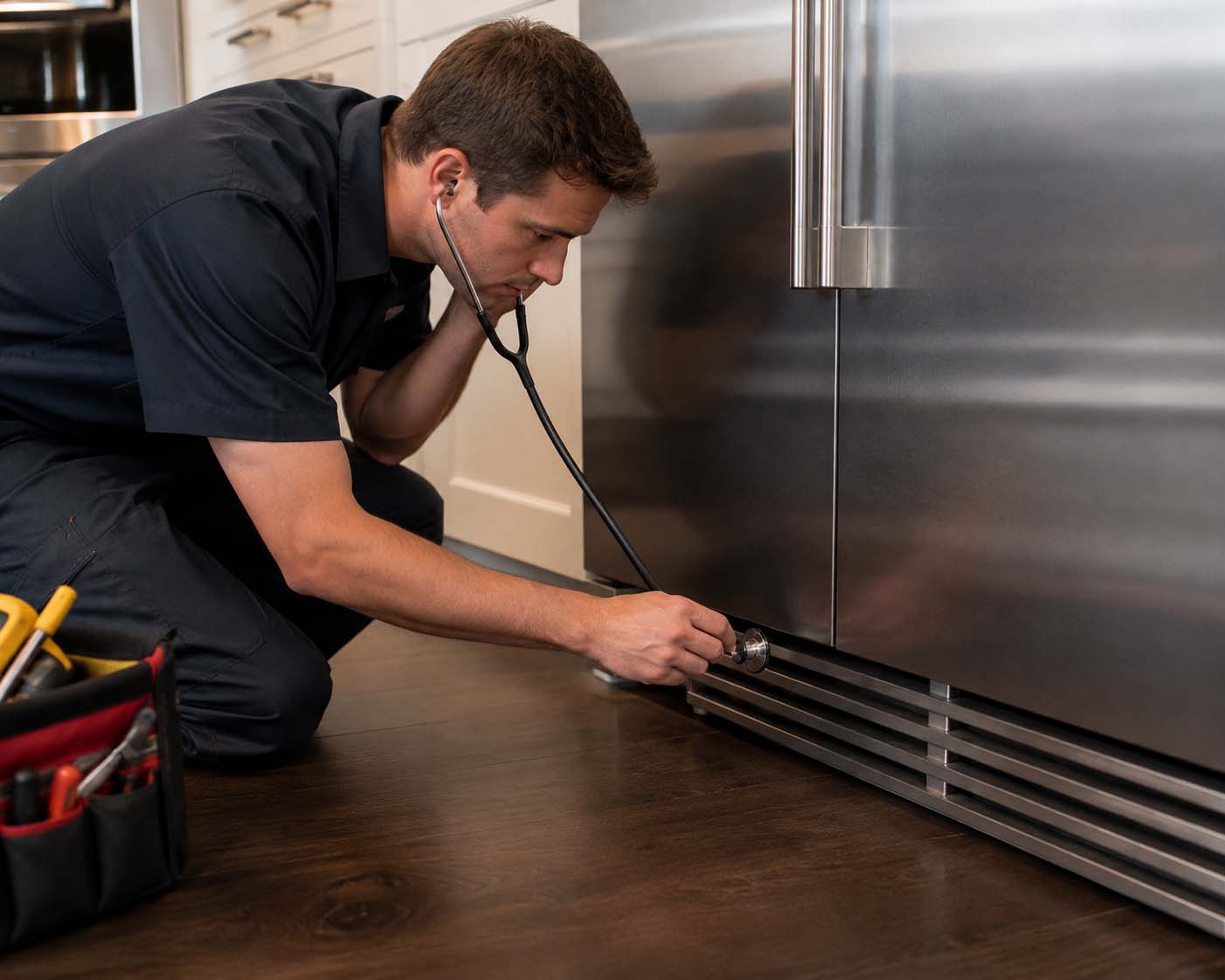
A technician starts by measuring the cabinet temperature against the display, then checks airflow at the condenser before opening any panel. That order rules out the cheap fixes first and protects the sealed system from an unneeded repair.
A dirty condenser that raises temperature by 10°F can cut cooling capacity by 7% and raise power draw by 10% (source). That single fault explains a large share of the “runs constantly but isn’t cold” complaints technicians see.
The technician also checks the door alignment and the gasket, since a bad seal can look identical to a sensor fault from the display alone. Only after ruling out airflow, the seal, and the sensor does the visit move to the sealed system or the electronics.
Repair costs for a Thermador wine cooler vary by which part failed and whether the unit is single-zone or dual-zone. The Thermador wine cooler repair cost guide breaks down real price ranges by component.
Repair or replace: the math for a built-in wine cooler
Can a Thermador wine cooler be repaired, or should I replace it?
A sealed-system repair, like a compressor swap, is worth doing on most built-in wine columns under 10 years old. The compressor and coils are usually the only parts that separate a working unit from a scrapped one.
A comparable panel-ready Thermador wine preservation column costs far more to replace than to repair
A cabinet older than 12 years with a failed compressor and a cracked door seal is the one case worth pricing against a new unit. Get that quote before you approve the repair.
Frequently asked questions
Why is my Thermador wine cooler not cooling?
Your Thermador wine cooler is not cooling because of a blocked fan, dust-clogged coils, or a faulty sensor. It can also be a failed compressor, a failed module, or a worn door seal. Check the room temperature and the door seal first, since both mimic a failed part, and book a diagnostic visit if the cabinet stays warm.
Can a Thermador wine cooler be repaired, or should I replace it?
Most Thermador wine coolers can be repaired, since compressors, fans, sensors, and door seals are all replaceable parts. Repair makes sense on units under 10 years old with one failed part. Replacement becomes the better option once the cabinet is older and a second major part fails within the same year.
Why is only one zone warm on my dual-zone Thermador wine cooler?
One zone runs warm on a dual-zone Thermador wine cooler because each zone has its own compressor or cooling circuit and its own sensor. A single failed sensor or a blocked vent on one side explains a warm zone next to a working one. The healthy zone is proof the main power supply and control board are fine, which narrows the repair to that one side.
How long does a Thermador wine cooler last?
A Thermador wine cooler’s lifespan depends on the cooling system and how well the coils are maintained, with compressor-based single-zone units generally outlasting thermoelectric models. See how long Thermador appliances last for lifespan ranges by appliance type. Regular coil cleaning and a stable room temperature are the two factors that most affect how long yours runs before a major repair.
What does it cost to repair a Thermador wine cooler that won’t cool?
Repair costs for a Thermador wine cooler that won’t cool depend on which part failed. Costs range from a simple fan or seal swap up to a full sealed-system repair for a bad compressor. See our Thermador wine cooler repair cost guide for ranges by component, and book a diagnostic visit for an exact quote.
Can I fix a Thermador wine cooler myself?
You can safely check the room temperature, the door seal, the breaker, and the vent clearance yourself, and those checks fix plenty of cooling complaints. Opening the sealed refrigerant system or replacing a compressor needs licensed tools, so that step belongs to a certified technician. Attempting it yourself usually voids any remaining warranty on the unit.
Conclusion
A Thermador wine cooler that won’t hold temperature usually has one of five faults: fan, coils, sensor, compressor or module, or door seal. Room temperature and airflow checks rule out two of those in a few minutes. A sealed-system or electronic fault needs a technician with the right gauges and parts.
Booking a certified diagnostic gets you an exact repair quote before any part gets replaced. Same-day and next-day appointments are available in most service areas, so a cooling fault gets diagnosed before wine is at risk. Schedule a diagnostic visit with Thermador Repair Group to confirm the cause and the cost.