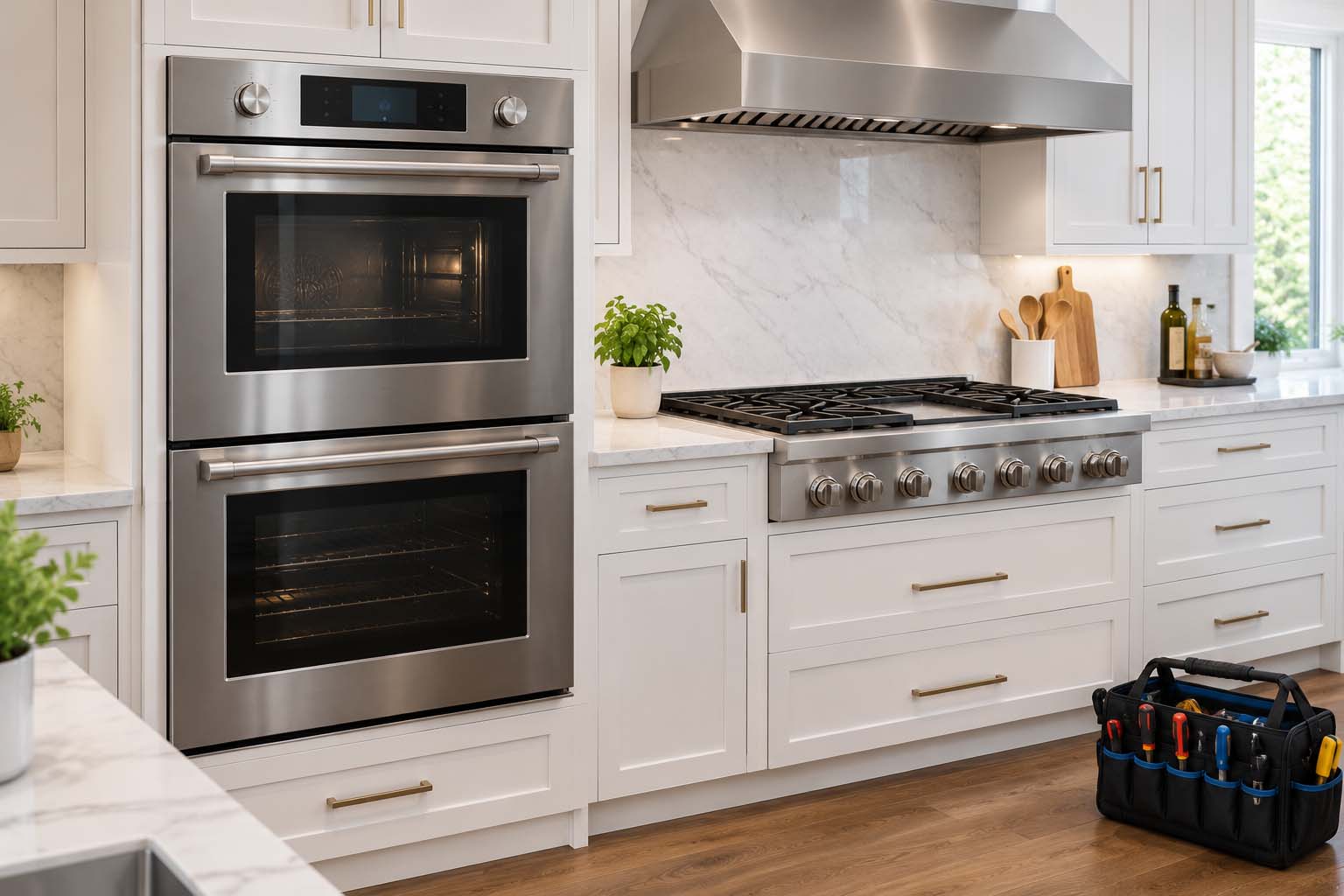
Thermador oven and range troubleshooting starts by matching the symptom to its likely cause. No power points to a tripped breaker or blown fuse. No heat points to a failed element or igniter. Wrong temperatures point to calibration or a faulty sensor. Confirm the fault, then choose a safe reset or a certified repair.
Thermador Repair Group maintains this guide as a triage hub for owners of Thermador wall ovens, ranges, and dual-fuel cooking suites. A high-end oven fails differently than a budget model, so the right first step is naming the fault, not guessing at parts. This page walks through each common problem at a glance, then points you to the deeper fix or the right service page. When a repair calls for a certified technician, help is one call away at (855) 920-0838.
Your Thermador oven or range won’t turn on
A dead display almost always means the appliance is losing power before it reaches the controls. Most no-power faults trace to just three sources: the wall outlet, the circuit breaker, or an internal fuse.
Check the breaker panel first. A Thermador range runs on a 240-volt double breaker, so reset both halves together if either has tripped. Confirm the outlet has power with a device you know works.
If the breaker holds but the oven stays dark, an internal thermal fuse or the main control board has likely failed. A 240-volt circuit carries enough current to injure you, so never probe live terminals without training.
When power checks out and the display stays black, book an oven or range diagnostic with a certified technician.
Your Thermador oven isn’t heating
An oven that powers on but never reaches temperature has usually lost its heat source, not its controls. In electric ovens, a bake element that has burned through is the single most common reason the oven won’t heat.
Watch the bake element during preheat. A healthy element glows evenly orange along its full length. No glow, dark spots, or visible blistering point to a failed element.
In gas ovens, a weak igniter that no longer draws enough current to open the safety valve is the usual culprit. You may hear the valve click without a flame following.
This fault has several branches, so the full walkthrough lives in the dedicated guide: Thermador oven not heating up — complete fix guide.
Your oven temperature is uneven or inaccurate
When food burns on one rack and undercooks on another, the oven is heating but reading temperature wrong. A drift of 25 to 50 degrees between the setting and the true cavity temperature usually points to a failing temperature sensor.
Test with a separate oven thermometer through a full preheat and a 20-minute hold. Small, steady gaps often correct through the oven’s own calibration setting.
Large or erratic swings point to the temperature sensor, the RTD probe, or a stalled convection fan. A worn door gasket can also let heat escape and skew the reading.
If a fault code appears alongside the drift, match it in the Thermador oven error codes guide before ordering any part.
A gas burner won’t light or keeps clicking
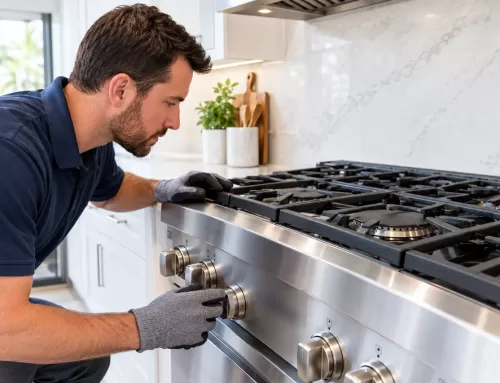
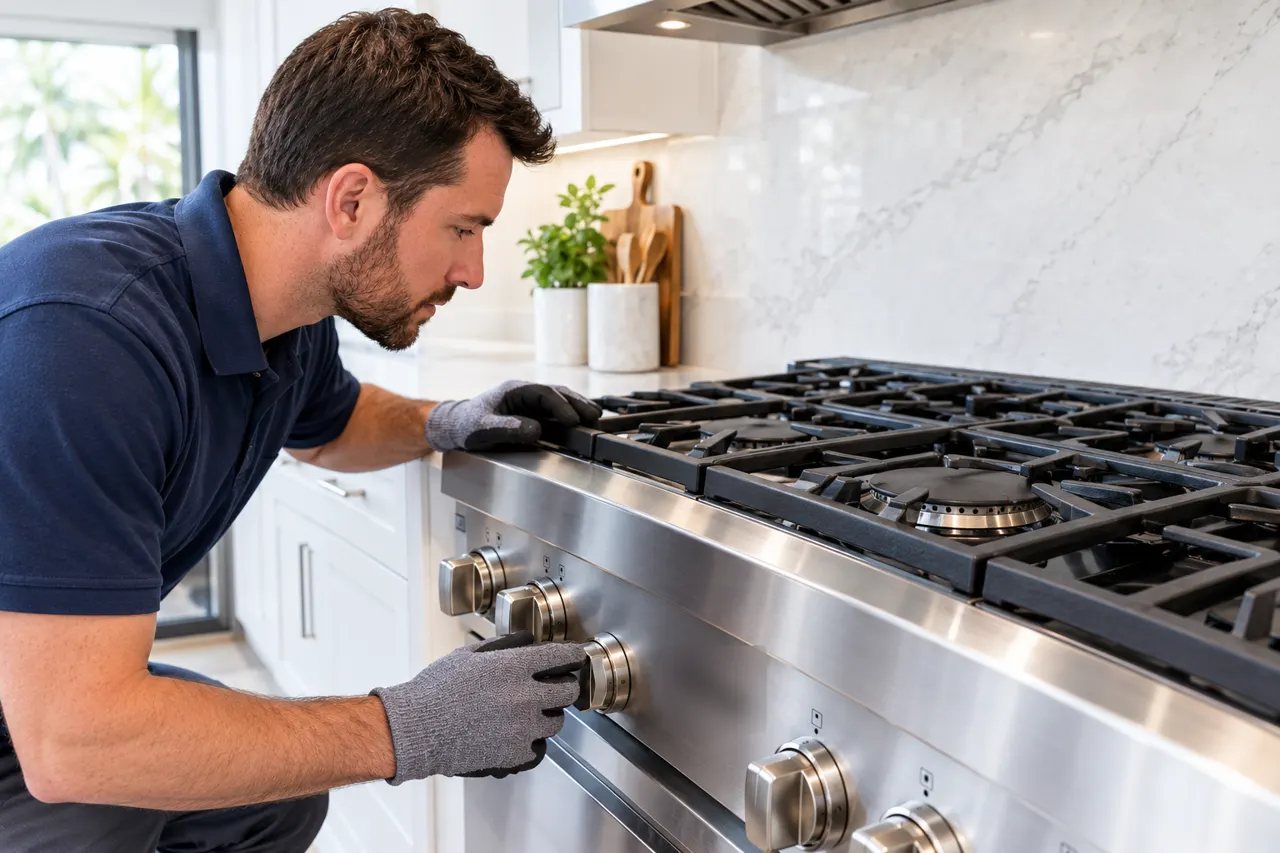
A surface burner that clicks without lighting is getting spark but no clean ignition. A burner that clicks but won’t catch is most often blocked by a wet or misaligned burner cap.
If you smell gas, stop. Shut off the supply, open a window, and call for service before any further troubleshooting. Gas faults are not a DIY project.
With no gas smell, dry the cap and igniter fully after any cleaning. Reseat the cap squarely on its base. A single burner that fails while others light points to a clogged port or a failed igniter switch.
For deeper ignition problems, see the gas stove repair guide or book range service.
The self-clean cycle won’t unlock
A door that stays locked after self-clean is a safety feature reacting to heat, not always a fault. Most self-clean doors will not release until the cavity cools below roughly 300 degrees Fahrenheit.
Give the oven 60 to 90 minutes to cool, then try the unlock again. Forcing the latch can damage the door lock motor.
If the door stays latched once fully cool, the lock motor or control board may have stuck mid-cycle. A single power cycle at the breaker sometimes releases it.
When the latch stays stuck cold or throws a code, book an oven repair rather than prying the door.
A fault code is showing on the display
Thermador ovens self-diagnose and show a fault code when a sensor or circuit falls outside its expected range. A fault code narrows a repair faster than any symptom, because it names the circuit the oven has already tested.
Write down the exact code before you clear anything. Some codes clear with a simple reset at the breaker; others lock the oven until the part is replaced.
A code that returns after a reset means the underlying part still needs attention. The same logic applies to control-board faults, which often surface as a frozen touchpad or a code that will not clear.
Look up your specific code in the Thermador oven error codes guide instead of guessing at parts.
When to call a Thermador technician
Some faults are yours to clear in minutes; others need certified diagnosis and genuine parts. Any repair involving gas, sealed 240-volt wiring, or a control board belongs with a trained technician, not a DIY session.
Call for service right away if you notice any of these:
- A gas smell near the range or oven
- A breaker that trips again each time you reset it
- A burning smell, smoke, or visible sparks
- A fault code that returns after a full reset
- A self-clean door still locked once the oven is cold
Thermador Repair Group’s certified technicians carry genuine parts and work to diagnose the fault on the first visit. Curious what a job runs? See the range and oven repair cost guide, then book range or oven service, or call (855) 920-0838.
Own more than one Thermador appliance? The refrigerator troubleshooting hub sorts cooling faults the same way this page sorts cooking faults.
Frequently asked questions
Why won’t my Thermador oven turn on?
Your Thermador oven usually won’t turn on because it has lost power before reaching the controls. Check the circuit breaker for a tripped 240-volt double breaker and reset both halves together. Confirm the wall outlet has power. If the breaker holds but the display stays dark, an internal fuse or the main control board has likely failed and needs a certified technician.
Why is my Thermador oven not heating up?
A Thermador oven that powers on but won’t heat has usually lost its heat source. In electric ovens, a burned-out bake element is the most common cause and will not glow orange during preheat. In gas ovens, a weak igniter often fails to open the safety valve. A failed temperature sensor can also block the oven from heating.
How do I reset a Thermador oven?
You reset a Thermador oven by cutting its power at the circuit breaker for 60 seconds, then restoring it. Switch off the double breaker feeding the oven, wait a full minute, and switch it back on. This clears many temporary fault codes and control glitches. If the same code returns after the reset, the underlying part still needs a repair.
Why is my Thermador gas burner not lighting?
A Thermador gas burner that clicks but won’t light is usually blocked by a wet or misaligned burner cap. Dry the cap and igniter fully, then reseat the cap squarely on its base. Clear any food debris from the ports. If one burner fails while the others light, the igniter switch or a clogged port is the likely cause.
How long should a Thermador oven stay locked after self-clean?
A Thermador oven stays locked after self-clean until the cavity cools below about 300 degrees Fahrenheit, which usually takes 60 to 90 minutes. This lock is a safety feature, not a fault, so do not force the door. If the oven stays latched once fully cool, the door lock motor or control board may have stuck and needs service.
Is it safe to repair a Thermador oven yourself?
Simple checks like resetting a breaker, cleaning a burner cap, or recalibrating temperature are safe for most owners. Anything involving gas lines, 240-volt wiring, or the control board is not. Those repairs carry real shock, fire, and gas risks and call for a certified technician. When you are unsure, stop and book a professional diagnosis.
Fix the small faults, then call in the rest
Thermador oven and range troubleshooting comes down to one habit: name the fault before you touch a part. Match your symptom to the category above, try the safe checks, and note any fault code exactly as it appears. Quick wins like a tripped breaker or a wet burner cap are yours to fix in minutes. Anything past that — no heat, a returning code, a self-clean door stuck cold — is a job for a certified technician. Book a range or oven diagnostic with Thermador Repair Group, or call (855) 920-0838 to schedule your repair.