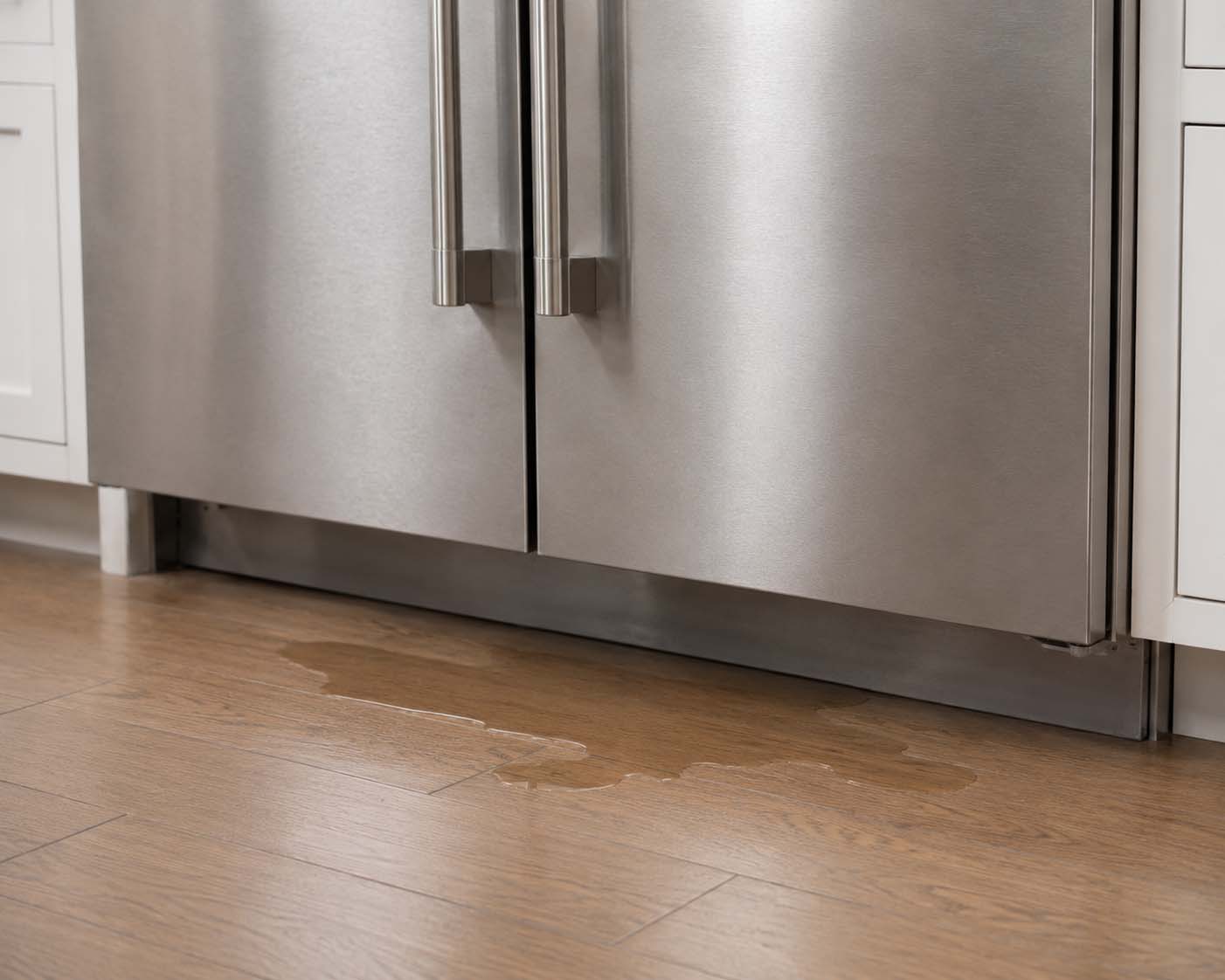
A Thermador refrigerator leaking water almost always traces to one of four faults: a clogged or frozen defrost drain, a blocked or split water line, a failing water inlet valve, or a cracked drain pan. Where the water appears — inside the compartment, under the unit, or at the dispenser — tells you which one you have.
Water on the kitchen floor makes any refrigerator problem look worse than it usually is. Most leaks come from a blocked drain or an inexpensive part, not the sealed system. This guide walks through each source in order of likelihood, what you can clear yourself, and when a built-in model needs a professional.
Thermador Repair Group repairs Thermador refrigerators in Massachusetts, Illinois, California, Florida, and Pennsylvania, using factory-trained, insured technicians and genuine Thermador parts. If you would rather skip the diagnosis, book Thermador refrigerator repair or call (855) 920-0838.
Where the water shows up tells you the source
Before pulling the unit out, note exactly where the water collects. Each leak point maps to a short list of causes.
| Where you find water | Most likely cause | DIY? |
| Inside, under the crisper drawers | Clogged defrost drain | Yes — flush the drain |
| On the floor, under or behind the unit | Split supply line or leaking inlet valve | Partly — shut off the water first |
| At the dispenser or ice maker | Overdue filter, cracked fill tube, or stuck fill valve | Filter yes; valves no |
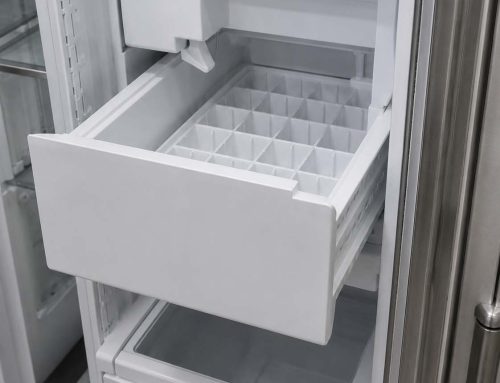
| Sheet of ice on the freezer floor | Frozen defrost drain | Yes — thaw and flush |
| Only on humid days or after the door was left open | Condensation from a worn door gasket | Yes — clean or replace the gasket |
Timing matters as much as location. Most refrigerators run an automatic defrost cycle every 8 to 12 hours, so a blocked drain leaves a fresh puddle daily. A leak that never pauses points to the pressurized water line instead.
Check the defrost drain first — it causes the most leaks
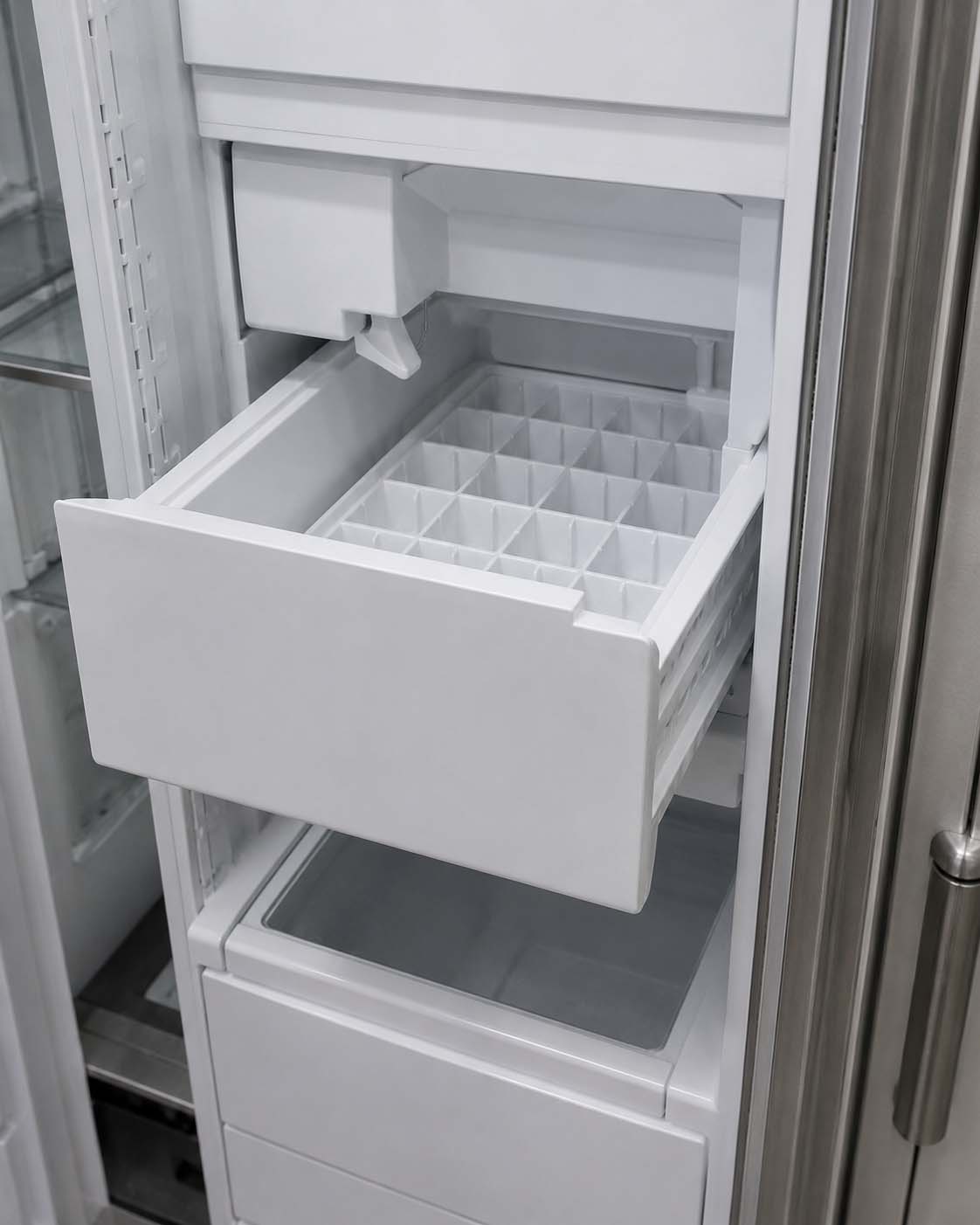
A clogged or frozen defrost drain is the most common reason for a refrigerator leaking water inside the compartment. During each defrost cycle, meltwater runs off the evaporator coils, through a small drain hole, and into an evaporation pan under the unit. Debris or ice blocks that hole, and the water backs up under the crisper drawers or slips out onto the floor.
Clearing it is a 15-minute job on most freestanding models: unplug the unit, remove the crisper drawers, and flush the drain hole with warm water from a turkey baster or syringe until it runs freely. If the drain refreezes within a few days, the drain heater has likely failed, and that part swap belongs to a technician.
If you also see frost building on the rear wall, or food is not staying as cold as usual, the defrost system itself may be failing. Our guide to a Thermador refrigerator not cooling covers those checks — the two symptoms often share one cause.
Where is the defrost drain located on a refrigerator?
The defrost drain sits at the lowest point of the evaporator area. On Thermador bottom-freezer models, that is behind the freezer’s rear interior panel, centered below the coils. In the fresh-food section, look for a small hole at the base of the back wall, behind the crisper drawers. The drain tube exits near the compressor at the bottom rear.
Water on the floor with a dry interior: check the supply line and inlet valve
A Thermador fridge leaving water on the floor while the inside stays dry usually has a pressurized-side leak. The supply line feeds the ice maker and dispenser from a household shutoff valve, and it connects to the water inlet valve at the bottom rear of the unit.
Household supply lines carry roughly 40 to 60 psi of pressure, so even a pinhole split drips around the clock instead of once per defrost cycle. Close the fridge’s shutoff valve, dry the floor, and wait. If the puddle stops returning, the leak is in the line, a compression fitting, or the inlet valve itself.
Why is my refrigerator leaking water from underneath?
Water from underneath comes from four places: an overflowing or cracked drain pan, a leaking water inlet valve, a loose fitting on the supply line, or meltwater missing the pan because the unit sits out of level. Check with a flashlight at the bottom rear. On built-in models, valve replacement means pulling the unit from its cabinet cutout — leave that to a technician.
Ice maker and dispenser leaks
When water collects near the ice maker or dispenser, start with the filter. Thermador’s use-and-care guidance calls for a new water filter every 6 months, and an overdue or badly seated cartridge can push water past its housing. Reseat or replace it before chasing anything else.
Beyond the filter, the usual suspects are a cracked fill tube, a misaligned fill cup, or a fill valve that no longer closes fully. A stuck valve overfills the ice mould, spills water into the bin, and the overflow freezes, then melts down the front of the unit as loose puddles.
Drain pan, leveling, and door gaskets
The drain pan under the unit normally lets its water evaporate between defrost cycles, helped by warm air from the condenser. A cracked or shifted pan releases that water onto the floor instead. Pans are cheap and simple to swap on freestanding models.
Leveling matters more than most owners expect: the front of a refrigerator should sit about a quarter inch higher than the back, so doors swing shut and meltwater runs to the drain instead of the floor. Worn door gaskets add to the problem by pulling in humid air that condenses and drips. Gasket cleaning is a 5-minute item on our Thermador maintenance checklist.
When to stop DIY on a built-in Thermador
Flushing a drain, changing a filter, or cleaning a gasket is safe on any model. Stop when the fix requires pulling a built-in or column model from its cutout, opening the machine compartment, or working near wet electronics. These units are panel-integrated, weigh hundreds of pounds, and are easy to damage during removal.
Leak repairs sit at the accessible end of Thermador work: most drain, valve, and line fixes fall in the $150–$650 range published in our Thermador refrigerator repair cost guide, well below sealed-system territory. Against the cost of replacing a built-in refrigerator, repairing a leak is almost always the right call.
Thermador Repair Group offers same-day and next-day appointments across its service areas, including Lowell, MA and Oak Park, IL, with upfront pricing agreed before any work starts.
Frequently asked questions
How do I stop my fridge from leaking water?
Stop the leak by closing the refrigerator’s water shutoff valve, then flushing the defrost drain with warm water until it runs clear. Dry the floor and drain pan, and confirm the unit tilts slightly backward. If water returns within a day, the inlet valve, drain heater, or supply line needs professional attention.
Is it worth fixing a leaking refrigerator?
Yes — on a Thermador, almost always. Leaks usually come from drains, valves, lines, or pans, which are among the least expensive refrigerator repairs, and fixing them protects both the appliance and your flooring. Replacement only enters the conversation for older units that also need major sealed-system work, which a leak alone does not indicate.
Is a fridge leaking water dangerous?
A leaking fridge is rarely dangerous, but it should not wait. The real risks are slip hazards, warped flooring, and mold growing in the damp space under the unit. If water is reaching the machine compartment or any wiring at the bottom rear, unplug the refrigerator until it has been inspected.
Find the source, then fix it once
Trace the water to its origin before anything else: inside means the defrost drain, a constant floor leak means the supply side, and dispenser-area water means the filter or fill valve. Clear what you safely can, and leave cutout removal and valve work to a specialist. For everything else refrigerator-related, start with our Thermador refrigerator troubleshooting guide. Ready for a repair? Book a diagnosis online or call (855) 920-0838, and a factory-trained technician arrives with genuine Thermador parts.