Thermador appliances last roughly 10 to 20 years depending on type: built-in refrigerators up to 20 years, gas and dual-fuel ranges 15 to 20 years, wall ovens 10 to 20 years, and dishwashers 10 to 15 years. Maintenance, usage intensity, and repair quality decide which end of each range you land on.
Those numbers put Thermador well above mass-market averages — but only when the appliances get the care a Bosch-built platform expects. Below you’ll find the expected lifespan for each appliance type, what quietly shortens it, and the point at which repairing still beats replacing. Thermador Repair Group’s certified technicians keep Thermador suites running past the 15-year mark nationwide; if one of yours is showing its age, book an assessment.
Lifespan by appliance type
| Appliance | Expected lifespan | Typical first major repair |
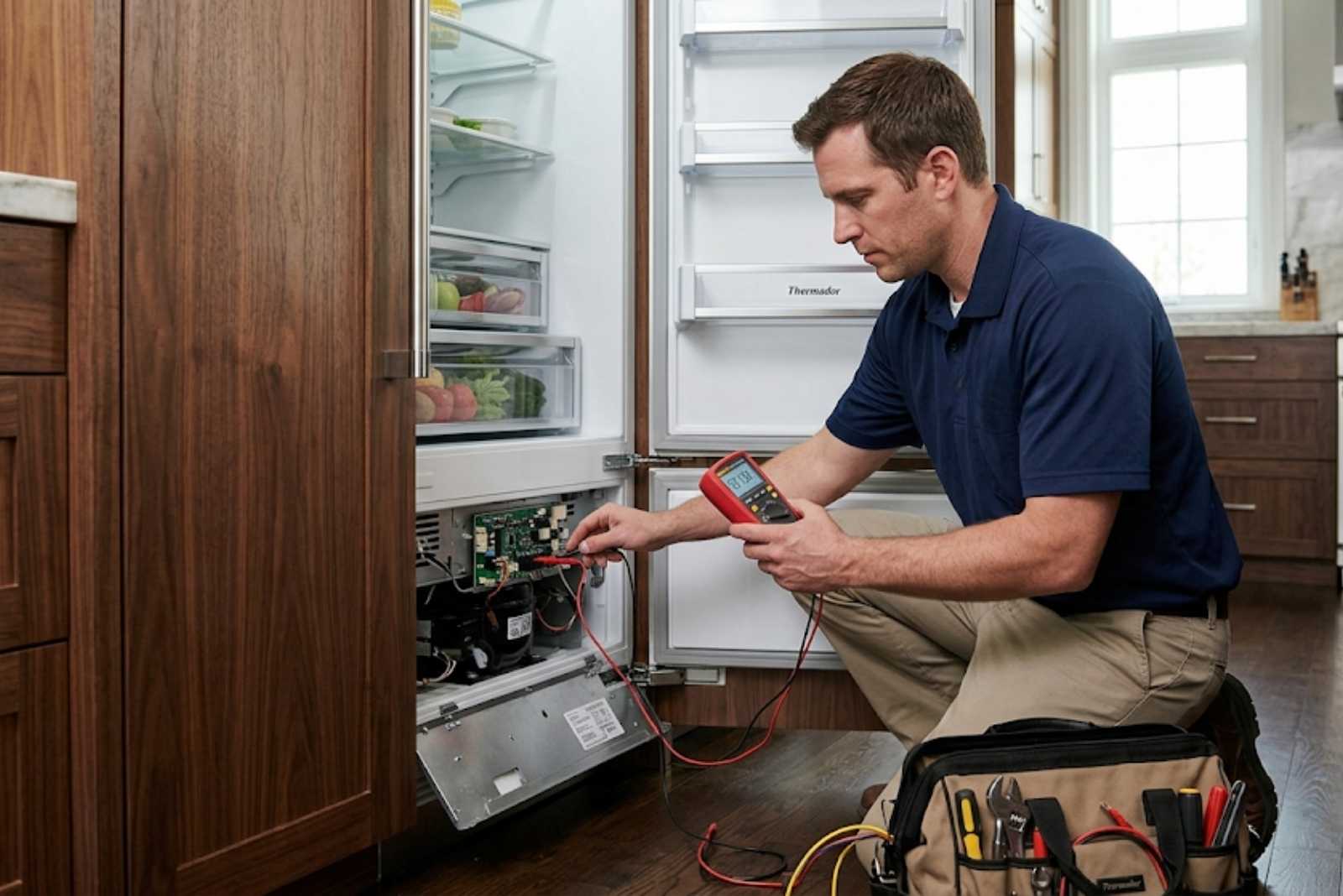
| Built-in refrigerator / freezer column | Up to 20 years | Ice maker or sensor, years 6–10 |
| Gas / dual-fuel range | 15–20 years | Igniter, years 5–8 |
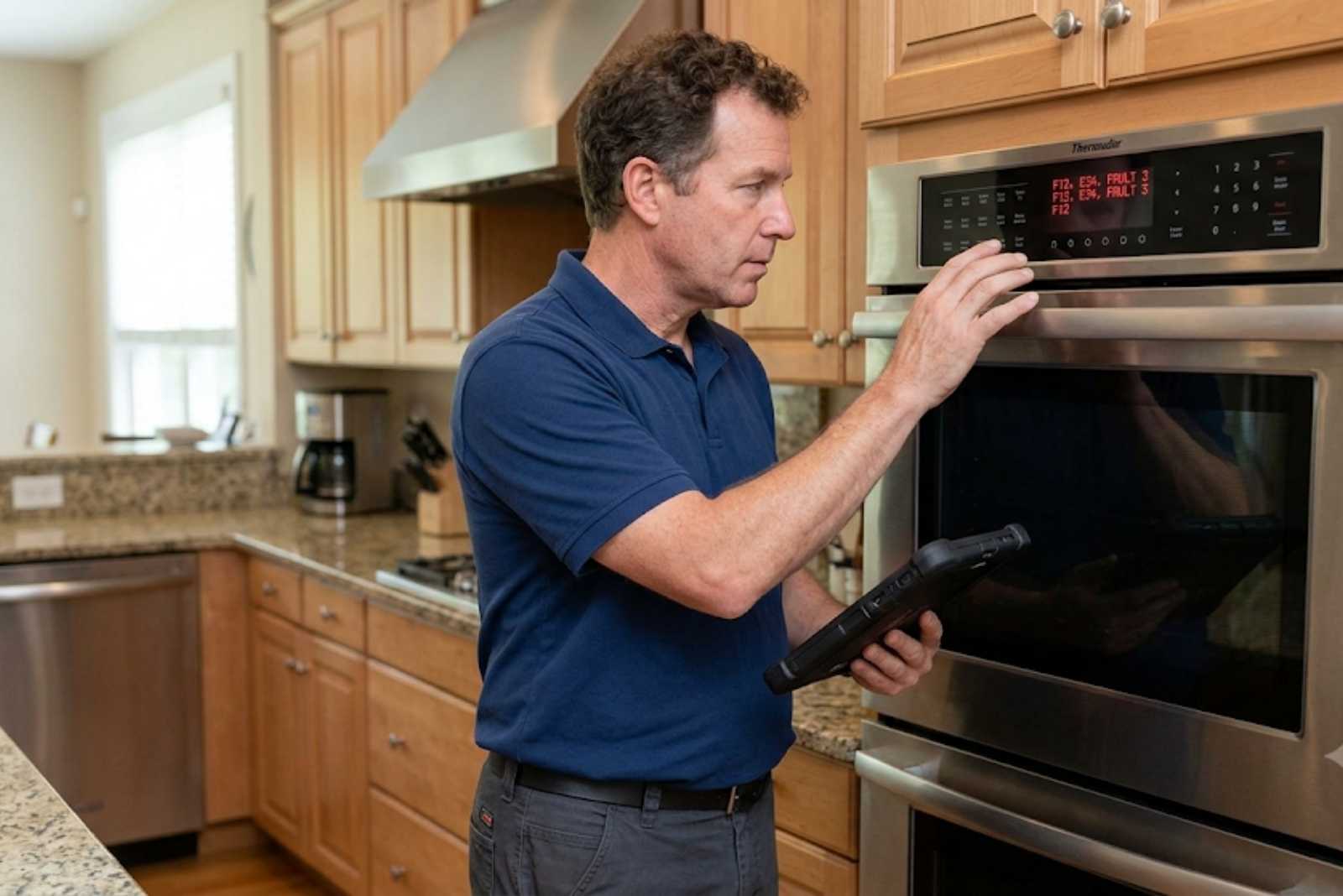
| Wall oven (single/double) | 10–20 years | Temperature sensor or element, years 7–10 |
| Cooktop / rangetop | Around 15 years | Igniter or spark module |
| Dishwasher | 10–15 years | Drain pump or heater circuit |
| Wine cooler | Varies — sensitive to ambient heat and door-seal condition | Temperature control faults |
The refrigeration numbers deserve context: the average refrigerator lasts about 14 years, while Thermador built-ins are engineered to stay functional up to 20, according to Designer Appliances. On the cooking side, a well-maintained Thermador range lasts 15 to 20 years or longer, per Home Alliance’s technician guidance. Gas cooking generally outlasts electric because there are fewer electronics to age.
Note the “typical first major repair” column: the first component failure arrives long before end of life. A range that needs an igniter at year 6 is not a range that’s dying — it’s a 15–20 year appliance a third of the way through its service life.
What shortens a Thermador appliance’s life
Almost every early failure we see traces to one of five habits. A blocked toe-kick condenser on a built-in refrigerator forces the compressor to overwork daily — dust, pet hair, or a rug against the grille is the single most common self-inflicted lifespan cut. Running the oven’s self-clean cycle monthly bakes the door gaskets, hinges, and adjacent electronics. Grease left in burner ports corrodes igniters. Skipped water filters scale up the ice maker. And deferred small repairs cascade: a $250 sensor ignored for a year can take a control board with it.
Environment matters too. Voltage fluctuations, hard water, and hot ambient rooms (garages, sun-facing kitchens) all subtract years — refrigeration and wine storage feel ambient heat the most.
What stretches it toward the 20-year end
The owners whose appliances reach 18–20 years do three things: they follow a maintenance calendar, they use certified technicians with OEM parts, and they repair faults when the faults are still small. The calendar is the easy part — our Thermador maintenance checklist lays out the monthly-to-annual schedule, and Sears Home Services likewise recommends a professional inspection at least once a year to keep Thermador appliances lasting longer.
OEM parts matter more on this platform than on mass-market appliances. Thermador is built by BSH (the Bosch group), and its sensors and boards are calibrated to spec — an off-spec aftermarket sensor reads wrong, and a board that reads wrong makes wrong decisions all day.
When repair still beats replacement — even on an older unit
On luxury appliances the standard “replace it if the repair exceeds 50% of value” rule flips in favor of repair far longer than homeowners expect. Standard Thermador repairs run about $200 to $600, per Sears Home Services — against a $10,000+ built-in column or an $8,000+ pro range, even a $900 repair is under 10% of replacement, before counting the cabinetry work a built-in swap involves. A 12-year-old Thermador with a failed part is usually worth fixing; the calculation only turns when sealed-system or multi-board failures stack on a unit near the 20-year mark. Our Thermador appliance repair cost guide breaks down the ranges by appliance.
Frequently asked questions
Are Thermador appliances worth repairing after 10 years?
Usually yes. At year 10, a Thermador range or built-in refrigerator is only halfway to two-thirds through its expected life, and most faults at that age are component-level — igniters, sensors, ice makers — in the $200–$600 repair band. Replacement only starts winning when repairs stack up or a sealed-system failure hits a unit already near 20 years.
Do built-in Thermador refrigerators last longer than freestanding ones?
They’re built to — Thermador built-ins are engineered to remain functional up to 20 years, against roughly 14 for the average refrigerator. The design helps: the compressor and condenser sit in a serviceable toe-kick module, and the cabinet is intended to be repaired in place rather than swapped. The condition is airflow — a blocked toe-kick grille erases the advantage.
What are the signs a Thermador appliance is reaching end of life?
Watch for repair stacking rather than any single fault: two or more major failures within a year, cooling that drifts even after sensor and condenser service, or parts availability becoming the bottleneck on a 18–20-year-old unit. One failed component on an otherwise healthy appliance is normal mid-life wear, not a death notice — get it assessed before assuming replacement.
The lifespan is a range — you choose the end of it
Thermador builds appliances for 15–20 years of service, but the second decade is earned through upkeep and timely, certified repairs. Put the maintenance calendar in place, fix small faults while they’re small, and the same range cooks for two decades. If an appliance in your kitchen needs attention now, book a certified Thermador technician — a one-visit repair today is how a 12-year-old appliance becomes a 20-year one. Start with our refrigerator repair or oven repair service pages.