Thermador and Wolf pro ranges are both highly repairable, with 15–20 year service lives and the same common failure points: igniters, spark modules, and control electronics. imThermador’s edge is the broad BSH (Bosch) parts and technician ecosystem; Wolf’s is a 5-year parts warranty on burners, elements, and control boards after its 2-year full coverage.
A pro range is the appliance owners keep the longest, so repairability is a genuine buying criterion — and a genuine ownership question once the first igniter quits. This comparison covers what actually fails on each brand, how the warranties treat those failures, and what the repairs cost. Thermador Repair Group repairs Thermador gas and dual-fuel ranges nationwide with certified technicians — book a range diagnostic here.
What actually fails on a pro range — and it’s the same list on both
Across both brands, the first decade of ownership sees the same repair list: surface igniters that click without lighting (grease and moisture are the usual culprits), oven igniters and spark modules, temperature sensors, door gaskets and hinges on heavy pro doors, and control boards later in life. Gas-range repairs also price 10% to 20% above electric on average, because parts cost more and gas work needs experienced technicians, per HomeGuide. Neither brand escapes this list — the differences are in burner design, parts, and warranty treatment.
Burner design: star vs stacked, and what it means for service
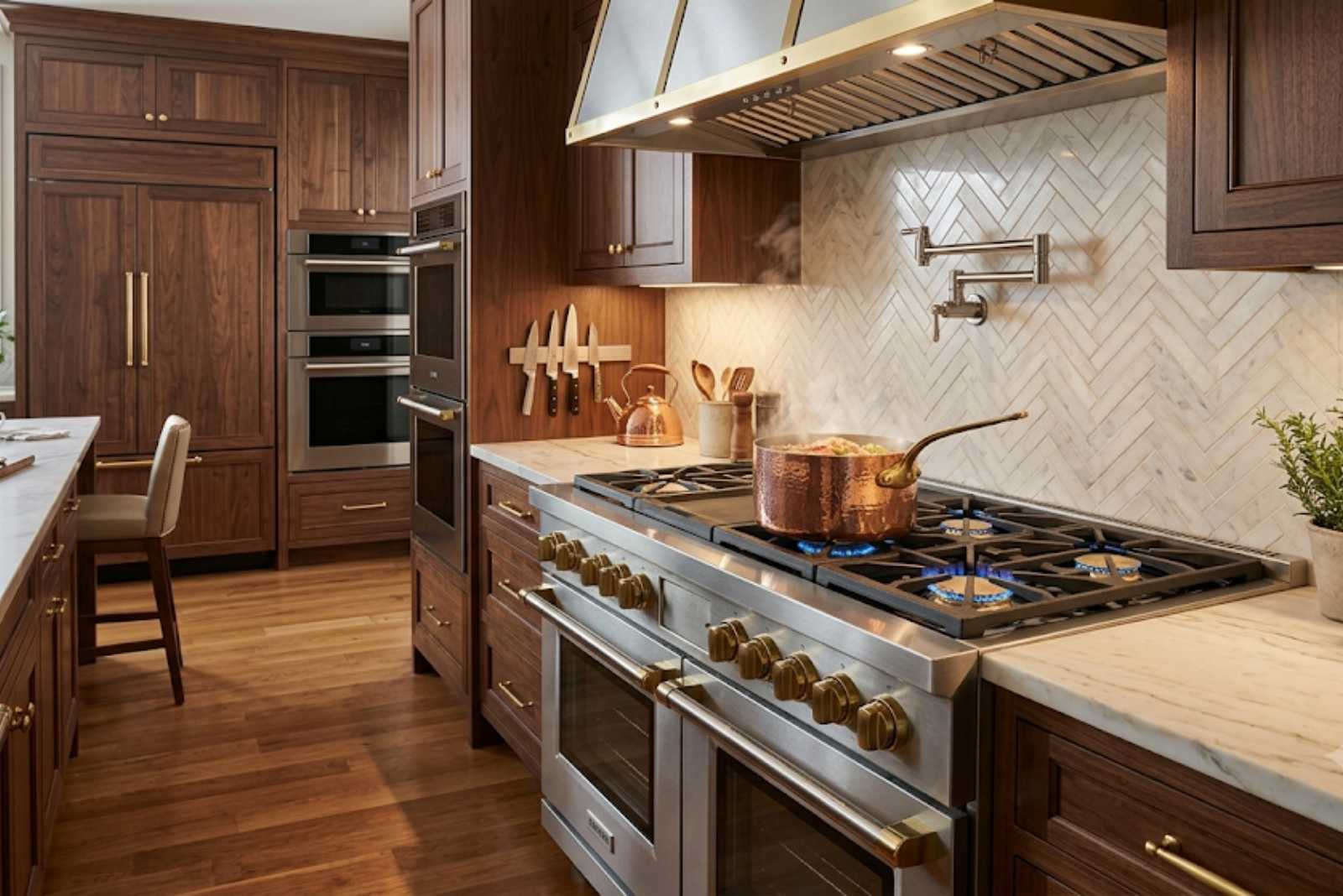
Thermador’s signature is the patented Star Burner — a star-shaped sealed burner with a longer flame perimeter. Wolf’s Professional line runs dual-stacked sealed burners for high-and-low flame control. From the service side both are mature, well-documented designs; day-to-day the maintenance is identical (keep the ports clear, keep the igniters dry), and a clicking igniter on either brand is more often a cleaning fix than a parts fix. The practical difference shows at parts time: burner components are brand-specific, so what matters is how quickly your servicer can source them — which is an ecosystem question, not a design one.
Warranty: Wolf’s 5-year parts list vs Thermador’s platform
Wolf covers 2 years full parts-and-labor, then a 5-year parts warranty on the components that matter on a range — gas burners, electric heating elements, electronic control boards, and induction generators — with the owner paying labor in years 3–5, per Wolf’s published warranty terms. Thermador’s standard coverage is 2 years full. On paper that’s a Wolf win for years 3–5 on covered parts.
The counterweight is Thermador’s ecosystem: it’s built by BSH, sharing platform, parts logistics, and technician training with Bosch and Gaggenau — one of the largest appliance service bases in the market. Wolf (owned by the Sub-Zero Group) counters with a strong factory-certified network, deepest in major metros. Out of warranty — which is most of a 15–20 year life — ecosystem breadth tends to matter more than the lapsed parts list.
Repair cost: same band, different fine print
Both brands live in the premium repair band: standard Thermador repairs run about $200 to $600 with complex jobs above $1,200, per Sears Home Services, and Wolf component repairs occupy a comparable range. An igniter or sensor on either brand is typically a one-visit fix; control boards and multi-component jobs push toward the upper band. Against an $8,000–$20,000 pro range, even upper-band repairs stay far under the repair-or-replace threshold — the math is in our Thermador appliance repair cost guide.
Frequently asked questions
Is Wolf more reliable than Thermador?
Both brands are engineered for 15–20 years, and both show the same common failure points at similar rates in service experience: igniters, sensors, and boards. Wolf’s reputation benefits from Sub-Zero Group’s build quality; Thermador’s from BSH engineering. Reliability differences between the two are smaller than the difference maintenance makes on either — clean burner ports and yearly service move the needle more than the badge.
Are Wolf parts more expensive than Thermador parts?
Often modestly, in line with Wolf’s higher purchase pricing — though it varies by component. Thermador’s BSH platform gives it broad parts distribution shared with Bosch, which helps both price and availability. On either brand, insist on OEM components: burner and control parts are calibrated to the platform, and off-spec substitutes are how repeat failures happen.
Which range is easier to find a technician for?
Thermador, in most markets — BSH-platform training covers Bosch, Thermador, and Gaggenau, so the qualified technician pool is wide. Wolf’s factory-certified network is excellent where it’s present, primarily major metros. Either way, use the standard vetting: platform-trained tech, OEM parts, written quote — the full checklist is in who repairs Thermador appliances.
The honest verdict
Wolf wins the years-3-to-5 warranty fine print; Thermador wins the two-decade ecosystem question — and both are ranges a good technician will happily keep alive past year 15. If you’re choosing between them, choose on cooking preference and buy with confidence either way. If you already own the Thermador, keep it on schedule with the maintenance checklist, and when an igniter starts clicking, our Thermador range repair service makes it a one-visit fix — book a certified technician.